
You’ve done your research, compared a few companies, received what looks like a competitive quote, and you’re feeling confident about your car transport booking. Then the invoice arrives — and it’s noticeably higher than expected.
Sound familiar? You’re far from alone. Hidden and unexpected charges are one of the most consistently raised complaints among customers who use car transport services in London — and in a city with as many operational complexities as the capital, there are more opportunities for costs to creep in than almost anywhere else in the UK.
This blog is written to give you the full, unfiltered picture. Not to alarm you, but to arm you with the knowledge to ask the right questions, read the fine print, and ultimately secure a genuinely transparent deal when you request a car transport quote in London. Because understanding what you’re paying for — before you pay it — is the difference between a smooth experience and a frustrating dispute.
Why Hidden Costs Are So Prevalent in the London Car Transport Market
London is not a simple operating environment for any vehicle logistics business. The combination of congestion charges, emissions zones, permit restrictions, parking regulations, and the sheer density of traffic creates a web of operational costs that simply don’t exist to the same degree anywhere else in the UK.
According to TomTom’s 2023 Traffic Index, London ranks as the most congested city in the UK and the sixth most congested in Europe, with drivers losing an average of 148 hours per year to traffic delays. For transport operators, time is directly money — and when routes take longer than projected, some of that cost inevitably gets passed on.
A 2023 survey by Citizens Advice found that 1 in 4 UK consumers reported being charged more than the original quoted price for a service in the logistics and transport sector, with a lack of itemised quoting cited as the primary contributing factor.
At the same time, the Competition and Markets Authority (CMA) has repeatedly highlighted concerns about drip pricing — a practice where an initial low headline price is presented, with additional charges added at later stages of the booking process — as a growing consumer protection issue across UK service industries.
Understanding these dynamics is the first step to protecting yourself.
The Hidden Costs You Need to Watch For

1. ULEZ and Congestion Charge Fees
This is the most common hidden cost for car transport services in London, and it catches more customers off guard than any other charge.
The Ultra Low Emission Zone (ULEZ), expanded by Transport for London (TfL) in August 2023, now covers all 33 London boroughs. Any transporter vehicle that does not meet Euro 6 diesel or Euro 4 petrol emission standards is liable for a £12.50 daily charge. On top of this, the Congestion Charge applies to vehicles entering the central zone between 07:00 and 18:00 Monday to Friday, and 12:00 to 18:00 at weekends — currently set at £15 per day as of 2024.
Reputable operators will absorb or clearly declare these charges in their quote. Others will list them as a separate line item only after booking — or worse, bundle them into vague “operational surcharges” that aren’t explained until invoicing.
Always ask specifically: “Does your quote include ULEZ and Congestion Charge fees if applicable to my route?”
2. Fuel Surcharges
Fuel surcharges became standard practice across the UK logistics industry following the extraordinary fuel price volatility of 2021–2023. According to the RAC Fuel Watch, diesel prices in the UK peaked at over 199p per litre in July 2022, and while prices have since moderated, many operators retained fuel surcharge clauses in their terms and conditions — often as a percentage of the base transport fee.
Some companies apply a fixed fuel surcharge regardless of the actual route distance. Others apply a variable rate tied to current pump prices at the time of collection. In either case, if your quote doesn’t explicitly state whether fuel costs are included, you need to ask.
The Freight Transport Association (now Logistics UK) estimates that fuel represents between 28% and 35% of total operating costs for road transport companies in the UK — so the incentive for operators to protect their margins through surcharges is entirely understandable. What’s not acceptable is applying them without prior disclosure.
3. Insurance Gaps and Upgrade Charges
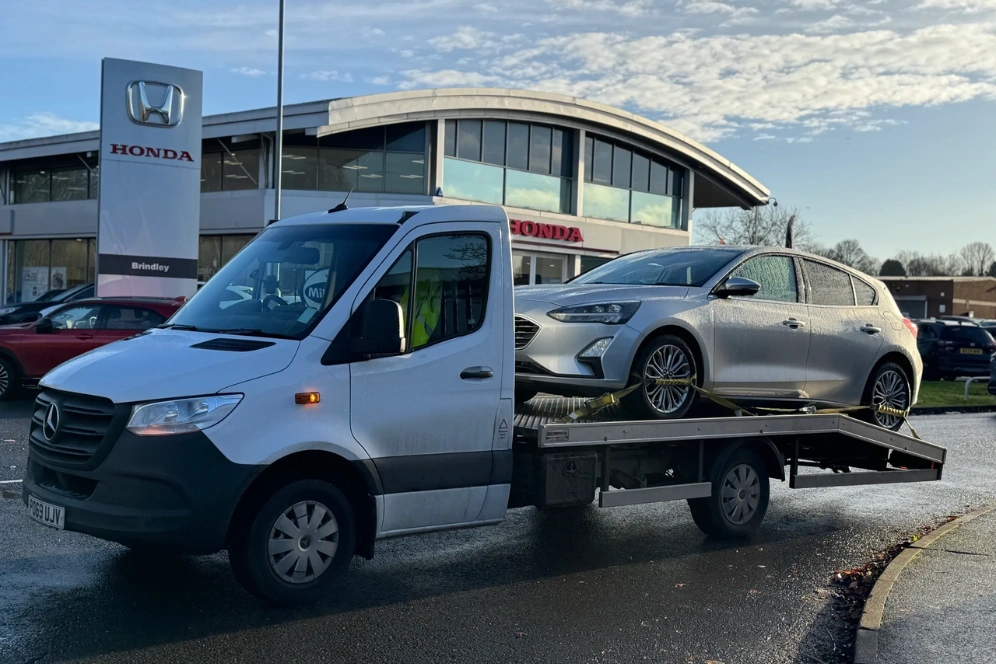
Every professional car transport services London operator should carry Goods in Transit (GIT) insurance and Public Liability insurance as standard. But the devil is very much in the detail of what those policies actually cover.
Standard GIT policies in the vehicle transport sector frequently carry per-vehicle limits — often capped at £10,000 to £25,000. If you’re transporting a prestige vehicle, a classic car, or a high-performance model worth significantly more than that threshold, your vehicle may only be partially covered in the event of damage or loss.
According to the British Vehicle Rental and Leasing Association (BVRLA), the average transaction value of prestige vehicles transported in London exceeds £45,000 — well above the standard GIT cover limit offered by many operators without declared enhancements.
Upgrading your coverage to match the full value of your vehicle is entirely reasonable, but some companies present this as a mandatory add-on during checkout rather than a transparent option upfront — effectively inflating the final cost beyond the original quote.
Ask for a copy of the operator’s insurance certificate and confirm the maximum per-vehicle claim limit before you sign anything.
4. Collection and Delivery Access Surcharges
This one surprises a significant number of London customers. If your vehicle needs to be collected or delivered to an address that’s difficult for a transporter to access — a narrow residential street, a multi-storey car park, a congested city-centre postcode, or a location requiring a permit — additional charges may apply.
In inner London especially, Restricted Parking Zone (RPZ) permits are required for loading and unloading in many residential areas. The cost of obtaining a temporary loading bay suspension in a London borough typically ranges from £60 to £150, depending on the borough and the duration required. Some operators pass this cost on transparently; others fold it into a generic “difficult access charge” that only appears on the final invoice.
Similarly, if your pickup or drop-off address is in a Low Traffic Neighbourhood (LTN) — of which there are now over 300 in London, according to Transport for London — the routing implications for a large transporter vehicle can add significant time and distance, and some operators will charge accordingly.
5. Same-Day or Express Booking Premiums
Urgency costs money — and that’s a legitimate commercial reality. But the size of the premium varies wildly between operators, and it’s rarely made clear during the initial quoting stage.
A 2024 analysis by Compare My Move found that same-day or next-day vehicle transport bookings in major UK cities attracted an average premium of 22% to 40% above the standard scheduled rate. In London, given the operational complexity, that premium can reach 50% at peak periods.
If you’re booking at short notice, explicitly ask what express or priority booking surcharges apply — and get the final price confirmed in writing before any collection is scheduled.
6. Storage and Holding Fees
What happens if your vehicle can’t be delivered on the agreed date — because you’re not available, the destination garage isn’t ready, or there’s been a delay at either end? Many customers assume their vehicle simply waits on the transporter or in the operator’s yard at no charge. In reality, storage fees can accumulate quickly.
Industry-standard storage charges for vehicle transport operators in the London area typically range from £15 to £50 per day, depending on whether the vehicle is stored in a secure compound or in open storage. Some companies include a 48-hour grace period at no charge; others begin billing from day one.
According to the Society of Motor Manufacturers and Traders (SMMT), vehicle transport delays — caused by factors ranging from address access issues to customer availability — affect approximately 12% of all booked collections in urban UK markets. Understanding the storage policy before you book could save you a substantial unexpected bill.
7. Cancellation and Amendment Fees
Life changes. Dates shift. Vehicles get delayed at auction. Whatever the reason, if you need to cancel or amend your car transport quote London booking after confirmation, there’s a very high chance a fee will apply.
The Consumer Rights Act 2015 requires that cancellation charges must be proportionate and clearly communicated at the point of sale — but many smaller operators bury their cancellation terms in lengthy terms and conditions rather than presenting them clearly during the booking journey.
Typical cancellation fee structures in the London car transport market look like this:
Cancellation 72+ hours before collection: 10–15% of total booking value Cancellation 24–72 hours before collection: 25–50% of total booking value Cancellation under 24 hours: 50–100% of total booking value
Amendment fees for date or address changes can range from £25 to £100 per change, depending on the operator and the notice period given. Always read the cancellation policy in full before confirming your booking.
How to Get a Truly Transparent Car Transport Quote in London
Knowing what to look for is only half the battle. Here’s a practical framework to ensure the car transport quote London you receive reflects the true cost of your move:
Request an itemised quote — insist on a line-by-line breakdown of all charges, not a single figure.
Ask direct questions about ULEZ, Congestion Charge, and fuel — confirm whether these are included or additional.
Confirm the insurance limit — and check it against your vehicle’s market value.
Read the cancellation and storage terms — before you confirm, not after.
Get everything in writing — email confirmation of the final agreed price, with all included and excluded items clearly stated.
Check for IMI or Logistics UK membership — operators affiliated with recognised trade bodies are more likely to operate transparently and professionally.
A professional, reputable operator offering genuine car transport services in London will have no hesitation answering every one of these questions clearly and in writing. Hesitation or vagueness in response to direct cost questions is itself a warning sign worth heeding.
The Bottom Line
The London car transport market is competitive, professional, and — in the right hands — excellent value. But the operational complexity of the capital creates genuine opportunities for costs to appear that weren’t visible in the original quote, whether through deliberate drip pricing or simply inadequate communication.
As a consumer, your strongest protection is knowledge. Understand the charging landscape, ask the right questions upfront, and insist on written confirmation of the all-inclusive price. Do that, and you’ll find that the most trustworthy operators in the car transport services in London market are absolutely worth their fees — with no surprises when the invoice lands.