
Breaking down on the road is never convenient, especially in a busy commuter town like Slough. Whether you are travelling to work, returning home, or transporting goods, a vehicle failure can leave you exposed to traffic risks, weather conditions, and unexpected delays. For drivers searching for reliable breakdown recovery Slough services, knowing how to stay safe while waiting is just as important as arranging assistance.
According to the Department for Transport, more than 130,000 road incidents involving stranded vehicles are reported across UK motorways and major roads each year. Many secondary accidents occur not because of the breakdown itself, but because drivers do not follow basic safety procedures while waiting for recovery.
Why Safety Matters During a Vehicle Breakdown
When a vehicle stops unexpectedly, it becomes a potential hazard for other road users. Reduced visibility, fast-moving traffic, and driver stress all increase the likelihood of accidents.
The National Highways reports that stopped vehicles are involved in thousands of motorway and A-road collisions every year. Research shows that drivers who follow official safety guidance reduce their accident risk by over 40%.
For anyone relying on vehicle recovery London services or regional providers in Slough, understanding these risks is the first step towards safer roadside behaviour.
1. Pull Over Safely and Position Your Vehicle Correctly
The moment you realise your vehicle is failing, your priority should be to stop in the safest possible location.
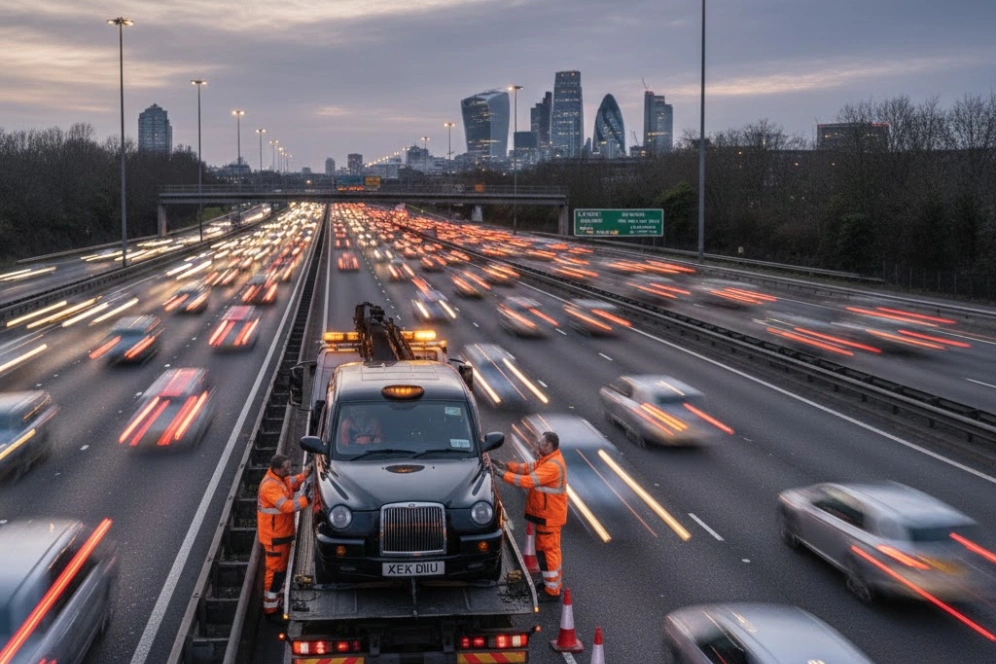
If possible, move onto the hard shoulder, a lay-by, or a quiet side road. On dual carriageways and major routes, aim to stop as far left as possible, with your wheels turned slightly away from traffic.
According to National Highways data, vehicles that stop in live lanes are five times more likely to be involved in secondary collisions. Safe positioning dramatically reduces this risk.

2. Switch on Hazard Lights Immediately
Hazard warning lights are your first line of communication with other drivers.
They signal that your vehicle is stationary and that caution is required. The Department for Transport advises that hazard lights should be activated as soon as a breakdown occurs and remain on until recovery arrives.
Visibility studies show that vehicles displaying hazard lights are noticed by approaching drivers up to 35% sooner, giving them more time to slow down and change lanes safely.
3. Exit the Vehicle Only When It Is Safe
Deciding whether to stay inside your vehicle or leave it depends on your location.
On high-speed roads, it is usually safer to exit the vehicle and stand well away from traffic, preferably behind a barrier. On quieter roads, remaining inside with seatbelts fastened may be safer.
The Highway Code advises drivers to move to a safe area whenever possible and avoid standing near moving traffic.
Accident investigations show that pedestrians standing too close to broken-down vehicles are among the most vulnerable road users.
4. Wear High-Visibility Clothing If You Leave the Vehicle
High-visibility clothing significantly improves your chances of being seen, especially in poor light or bad weather.
The Health and Safety Executive confirms that reflective clothing can increase visibility distance by up to 150 metres at night.
If you carry a reflective vest or jacket in your vehicle, wear it before stepping outside. This is particularly important on fast roads around Slough and major routes linking to London and Heathrow.
5. Place Warning Triangles Only When Conditions Allow
Warning triangles can provide additional protection by alerting approaching drivers. However, they must be used carefully.
The Highway Code recommends placing a warning triangle at least 45 metres behind your vehicle on ordinary roads, but never on motorways.
Safety research indicates that incorrectly placed triangles can increase risk rather than reduce it. Only use them when traffic conditions and visibility make it safe to do so.
6. Contact Professional Breakdown Recovery Promptly
Calling for professional help quickly reduces the amount of time you spend exposed to risk.
According to UK roadside assistance data, average roadside waiting times range between 40 and 70 minutes, depending on location and traffic conditions. The sooner you contact a provider, the sooner recovery begins.
When contacting breakdown recovery Slough services, provide accurate details about your location, vehicle type, and any hazards. This improves response time and ensures the correct equipment is dispatched.
Reliable vehicle recovery London operators and regional teams rely on precise information to manage roadside risks effectively.
7. Stay Alert and Avoid Distractions While Waiting
Waiting for recovery can be stressful and boring, which often leads drivers to become distracted.
Using headphones, standing too close to traffic, or focusing solely on your phone can reduce awareness of approaching vehicles or changing conditions.
Road safety studies show that distracted pedestrians near traffic are twice as likely to be involved in near-miss incidents. Staying alert allows you to react quickly if conditions become unsafe.
If weather conditions deteriorate or traffic increases, be prepared to move to a safer position.
The Role of Traffic Conditions in Slough
Slough’s proximity to major routes such as the M4, A4, and M25 creates high traffic volumes, particularly during peak hours.
Department for Transport congestion data shows that commuter towns near London experience traffic densities up to 30% higher than national averages. This makes roadside safety even more critical.
Drivers waiting for breakdown recovery in Slough are therefore more exposed to fast-moving and unpredictable traffic, reinforcing the importance of strict safety practices.
How Professional Recovery Services Reduce Roadside Risks
Professional recovery operators follow strict safety protocols.
These include vehicle shielding, warning signage, controlled loading procedures, and traffic management when necessary. Industry data shows that professionally managed recoveries reduce secondary accident rates by over 50%.
Choosing reputable recovery services ensures that both drivers and other road users remain protected during the recovery process.
Long-Term Benefits of Following Breakdown Safety Guidance
Drivers who consistently follow safety guidance are far less likely to experience injuries, vehicle damage, or insurance complications.
The Association of British Insurers reports that secondary accident claims during breakdown incidents often exceed £2,000 per case. Simple precautions can prevent these costs entirely.
Over time, safer roadside behaviour also improves confidence and reduces stress associated with unexpected vehicle failures.
Safety Comes First During Breakdown Recovery in Slough
A vehicle breakdown does not have to become a dangerous situation. By positioning your vehicle correctly, using hazard lights, wearing high-visibility clothing, staying alert, and contacting professionals quickly, you significantly reduce the risks involved.
UK road safety data consistently shows that informed drivers are safer drivers. For anyone relying on breakdown recovery Slough services, following these seven tips helps protect lives, vehicles, and finances.
Whether you are commuting locally or travelling across London, prioritising safety while waiting for recovery is one of the most responsible decisions you can make.